4 MIN READ -- Earlier this month, Chicago Loop Alliance designated the Loop “El barrio de todos”.” The new nickname recognizes that home isn’t just the place Chicagoans sleep, but the restaurants, shops, offices, schools, theaters, parks and streets they experience together. The initiative, intended to unite and promote the Loop community, includes participation from cultural institutions, residents, property owners, schools, community organizations, Loop businesses, individual Chicagoans and Mayor Lightfoot.
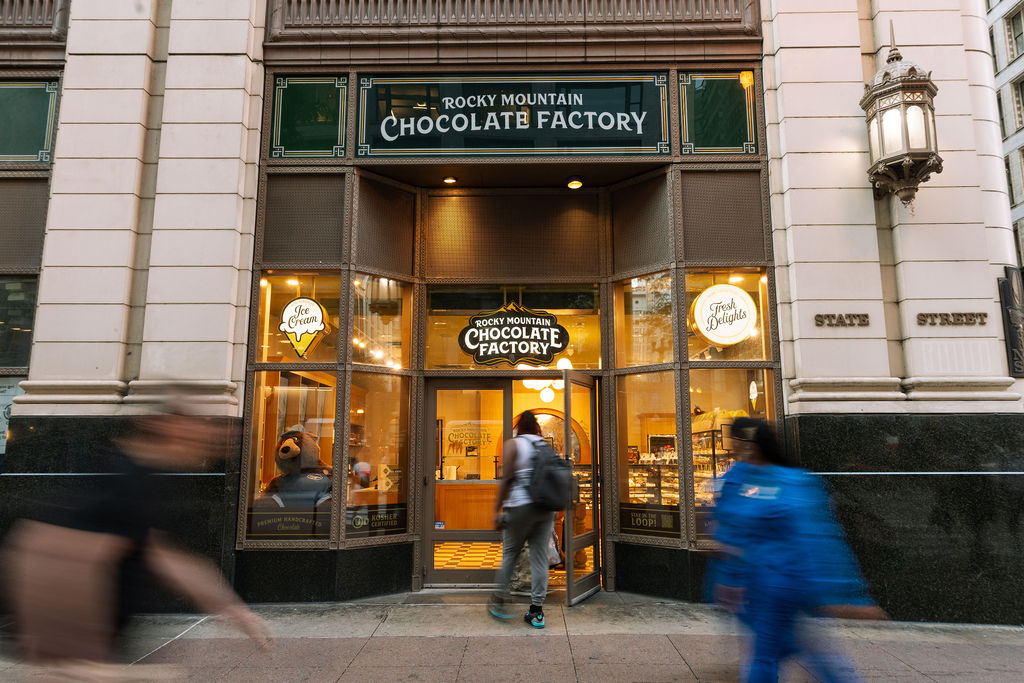
To spread the word, Chicago Loop Alliance installed banners and street-level signage with the “Everyone’s Neighborhood” moniker along State Street.
From July 6-13, prominent buildings in the Loop, including Willis Tower, lit up blue to celebrate “Everyone’s Neighborhood.” This light-up initiative was coordinated in partnership with the Building Owners and Managers Association of Chicago. Prominent institutions like the Chicago Theatre, Nederlander Theatre, Auditorium Theatre and Joffrey Ballet used their marquees to share the “Everyone’s Neighborhood” message. Digital and print graphics of the message were distributed to hundreds of other businesses and offices throughout the Loop.

Organizations and individuals have also gotten in the spirit of “Everyone’s Neighborhood” by using #BackInTheLoop on social media to share their longing and nostalgia for the Loop, or to tell how they’re returning, rebuilding, and re-adapting (or how they never left).
From the onset, it was important to Chicago Loop Alliance that the “Everyone’s Neighborhood” initiative encourage community actions, not just words.
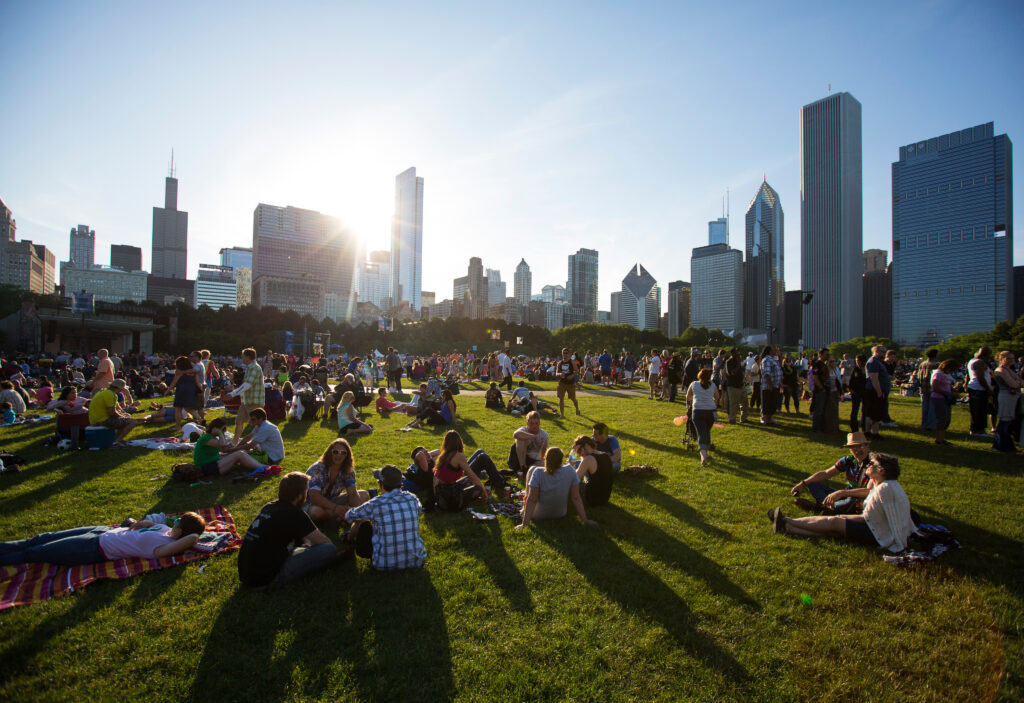
“We chose this nickname because we believe the Loop is everyone’s neighborhood; that’s evident in our workforce and in the people who come downtown from across the city for things like our world-class public art, free Millennium Park programming, shopping and other attractions,” said Chicago Loop Alliance President and CEO Michael Edwards. “But we also intend for it to be inspiring and aspirational, and to encourage greater inclusion. We hope this new moniker will make the Loop’s decision makers even more aware of how they can use their positions in this city to unite Chicagoans from every ZIP code.”
A few Chicago Loop Alliance members shared what they’re doing to embody the “Everyone’s Neighborhood” nickname.
The Art Institute of Chicago provides free access to children under 14, Chicago teens under 18, Link and WIC cardholders, active-duty military, and Illinois educators every day. Free hours and free days are offered to Illinois residents throughout the year. The Art Institute is also committed to racial justice and equity.

“Inclusion – and the strength, energy and diversity of perspectives that comes with it – has always been essential to the legacy of the Art Institute, and our relevance to future generations,” said James Rondeau, President and Eloise W. Martin Director of the Art Institute of Chicago.
El Hotel Chicago Athletic Association is giving back to their neighbors, who have given them so much. For every booking, they're donating $25 to local nonprofit My Block My Hood My City's small business relief fund.

Willis Tower is undergoing the biggest restorative transformation in its nearly 50-year history to become an energetic, welcoming neighborhood destination for tenants, Loop workers, visitors and locals alike. The transformation includes the addition of Catalog, a curated dining, entertainment and community experience, as well as a 30,000-square-foot outdoor deck and garden, evolving at the base of the Tower. Catalog extends the streetscape, creates community, and immerses visitors in a true Chicago environment.
And although the iconic Auditorio Teatro is closed to the public right now, the organization is hard at work creating a more inclusive, diverse, equitable and accessible institution, and bringing its offerings to everyone online. They’re finding new ways to connect, even when it’s not possible to physically be together in the Loop. Community members near and far can keep up with the Auditorium by watching the theatre's At Home With the Auditorium y #AudTalk video series, checking out theatre history on the Auditorium's website, and joining a theatre watch party on Facebook.

Mientras que los trabajadores esenciales de The Loop y 20.000 habitantes Nunca se fue, el barrio vio un Un descenso del 80 por ciento en la actividad de los peatones durante la orden de permanecer en casa del estado, lo que ilustra la importancia del Loop 370.000 trabajadores y millones de visitantes anuales. Chicago tiene el segundo distrito empresarial más grande de Estados Unidos fuera de Midtown Manhattan, y los miembros de la numerosa población trabajadora del Loop provienen de todos los barrios de Chicago y más allá; esta es la principal motivación para obtener el título de “Barrio de Todos”. Antes de la pandemia de COVID-19, muchos trabajadores del Loop pasaban más tiempo despiertos en el Loop que en sus propios barrios; además, como hogar de algunas de las más grandes íconas de Chicago, los visitantes suelen visualizar primero el Loop cuando piensan en la ciudad.
The COVID-19 crisis elevated efforts to keep the Loop a safe, clean and healthy place for all. Chicago Loop Alliance has continuously coordinated power washings that incorporate a virucide monthly in an effort to kill strains of COVID-19 on street-level surfaces. The Chicago Loop Ambassadors have also been on the street seven days a week cleaning and disinfecting touch points like bike racks, garbage cans and door handles, as well as connecting people experiencing homelessness with resources they need. And after sweeping vandalism of the downtown area on May 29 and 30, Chicago Loop Alliance connected businesses with artists Missy Perkins and Barrett Keithley, who conceived of a project called “Paint the City,” which transformed boarded up businesses with hopeful murals.

Los límites del Loop son el río Chicago al norte y al oeste, la Ida B. Wells Drive al sur y el lago Michigan al este.