


3 MIN READ -- Chicago Loop Alliance (CLA) recently released its quarter one 2026 State of the Loop report. CLA has produced reports on downtown activity since July 2020, using a variety of data sources, tracking pedestrian and transportation activity, investment, retail, arts and culture, and more. View the quarter one (Jan.-Mar. 2026) State of the Loop report here.
“The Loop is the economic engine for the entire city,” said Rich Gamble, Interim President & CEO of Chicago Loop Alliance. “We are Everyone’s Neighborhood because we impact all 77 neighborhoods. We are a place of opportunity and connection. We employ. We entertain. We educate. We house. We bring people together from every corner of the city and beyond. Not only is the Loop central geographically, it is the center of Chicago’s identity, vitality, and future. It remains a critically important place, and one that plays a defining role in shaping the outlook of our city.”
Transportation
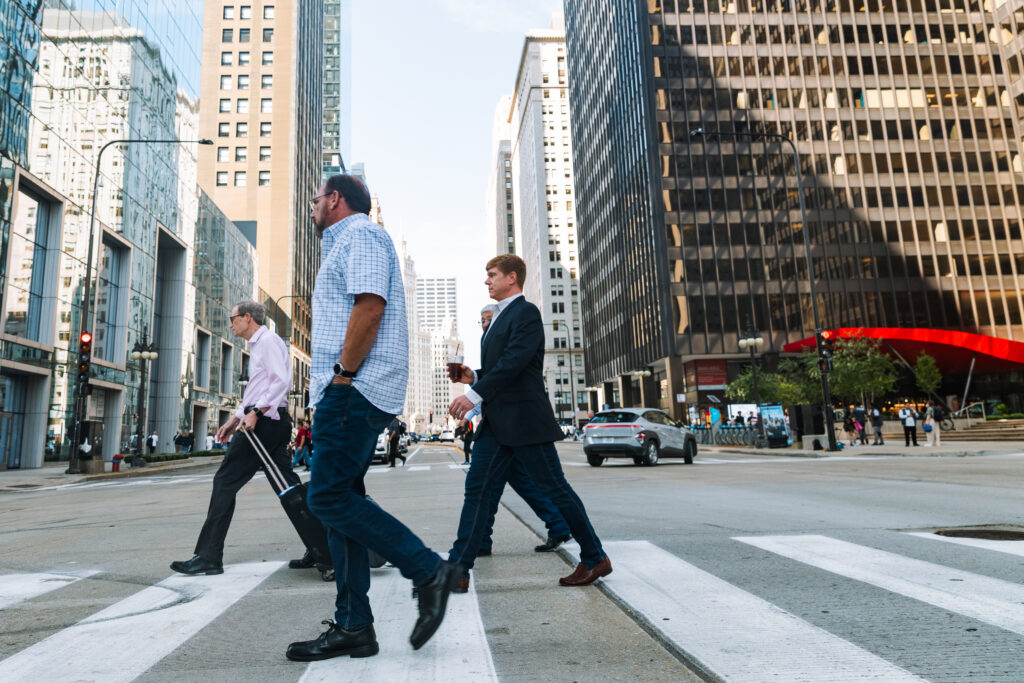
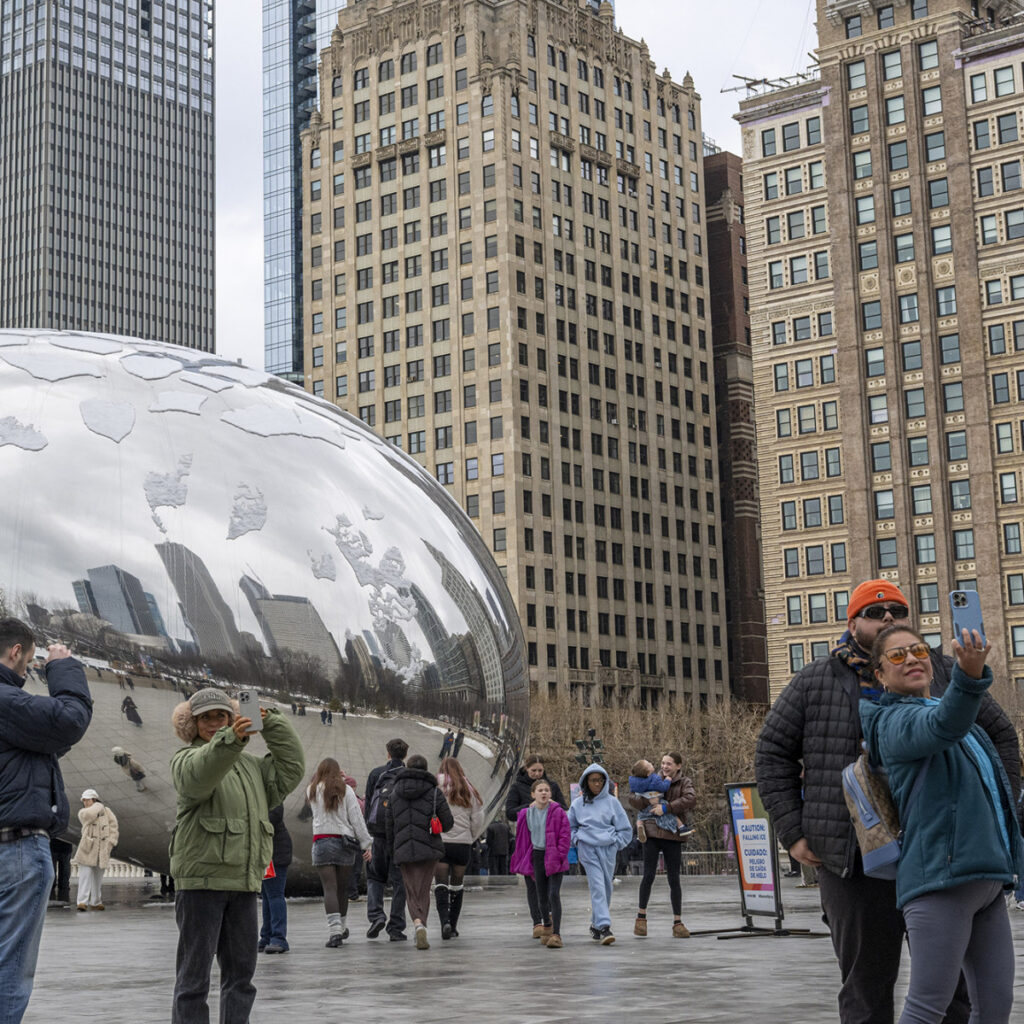
Despite record winter weather, quarterly pedestrian activity on State Street exceeded 2025 by 18 percent, peaking in February and averaging 92 percent of 2019 levels.

CTA buses and trains had an average ridership of one million on weekdays in Q4 2025, demonstrating consistent reliance on the Loop’s most popular mode of transportation. Metra saw 2.8 million riders in January, up 5 percent from the same time last year. This increased ridership is proportionate across all lines that terminate in the Loop, showing continued demand for frequent and reliable transit among commuters.
Arts and Culture
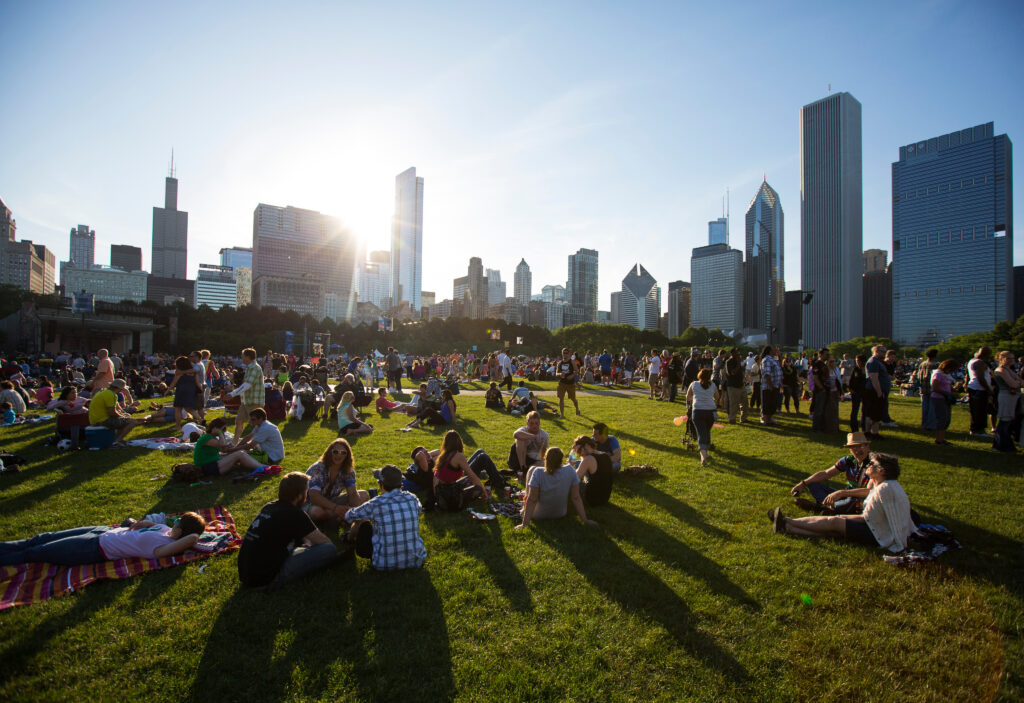
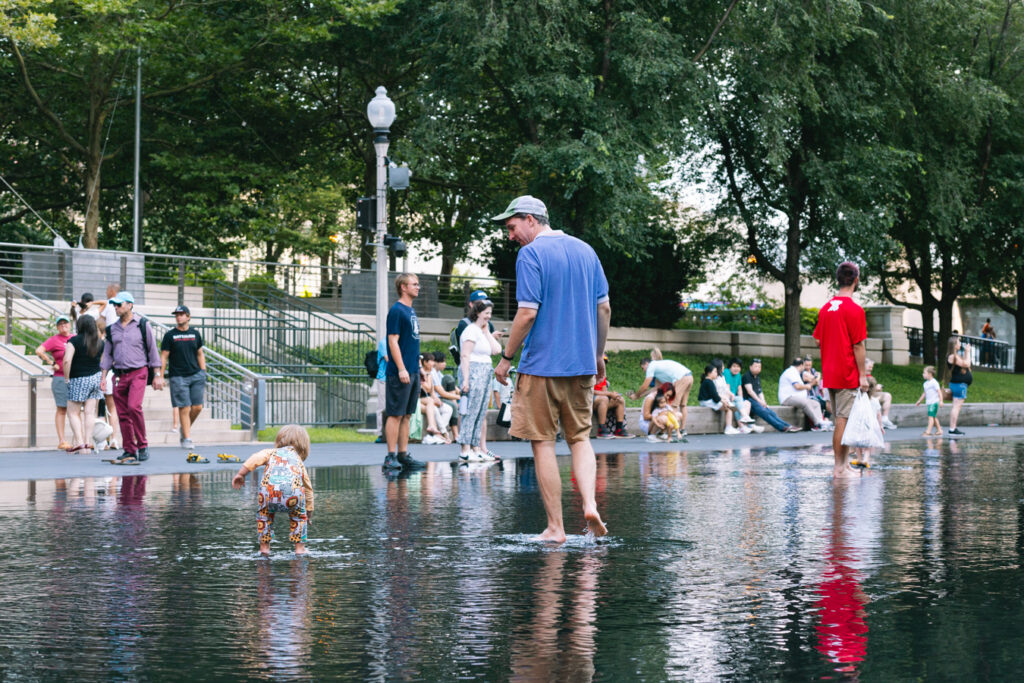
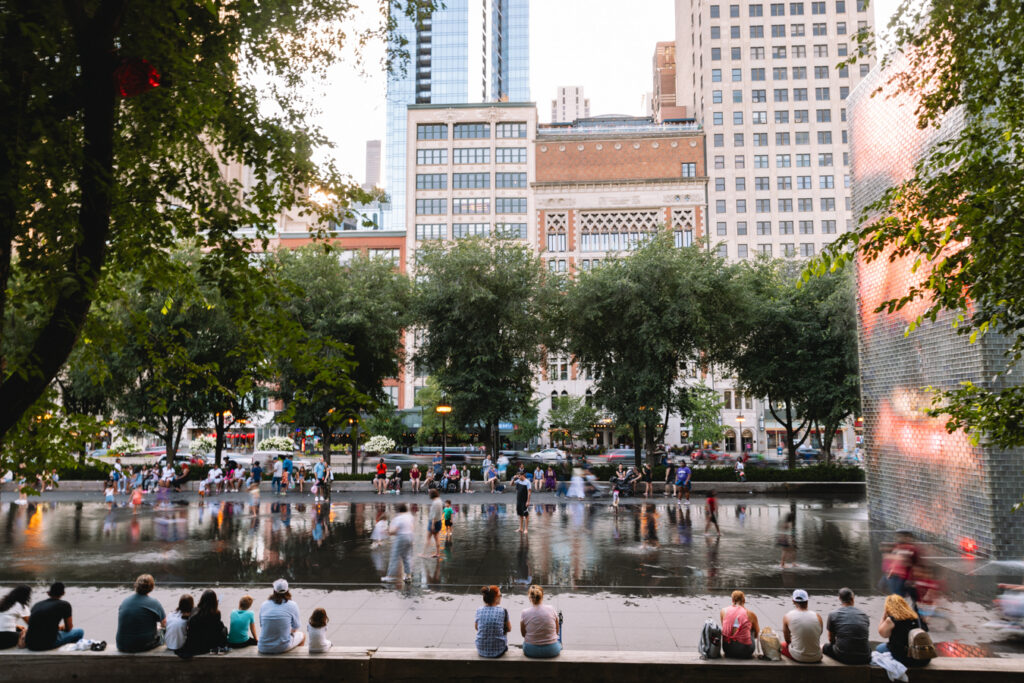
Over 1.7 million visitors flocked to the Loop this quarter, generating $485 million in economic impact. The St. Patrick’s Day Parade, River Dyeing, and Shamrock Shuffle drew over 200,000 pedestrians to State Street alone, and more than 800,000 visitors to the Loop. Theatergoers and other cultural event attendees totaled 957,000 over the first few months of the 2026 season, 15 percent higher than Q1 last year.

Economic Investment
Overall, retail vacancy in the Loop was down about one percent in 2025 compared to 2024, supporting steady progress in the Loop’s retail market (Stone Real Estate). Emerging investment in retail, office, and residential projects continued in Q1. Loop office buildings saw an influx of new restaurants catering to the steady return of in-person workers, as Q1 2026 office occupancy rose to 104 percent of 2024 levels on average (Avison Young Technologies, Placer.ai). Eight new businesses opened in the Loop with 20 more to open in the coming months. Retail continued to invest in State Street, with Barnes and Noble signing the largest lease the corridor has seen in recent years at 150 N. State Street.
Also on State Street, a developer has plans to revitalize the vacant historic building at 401 S. State Street. Plans include converting much of the building into a vertical farm; a health research center; an incubator for farming startups; and student and senior housing. In addition, in February the City announced a proposal selection for the vacant site near Harold Washington Library. The proposal calls for a 25-story residential building and improvements to nearby Pritzker Park, bringing new life to an area of high vacancy in the Loop. Investment in the Loop’s built environment in Q1 totaled $848 million.
Developments in the Loop
Several key real estate investments primed the Loop for continual improvement, including:
- 1 N. Wacker, an eight floor renovation totaling $32 million
- 213-227 S. State, a vacant retail building sold to longtime Loop occupant, Downtown Islamic Center
- 30 N. LaSalle, an additional office-to-residential conversion