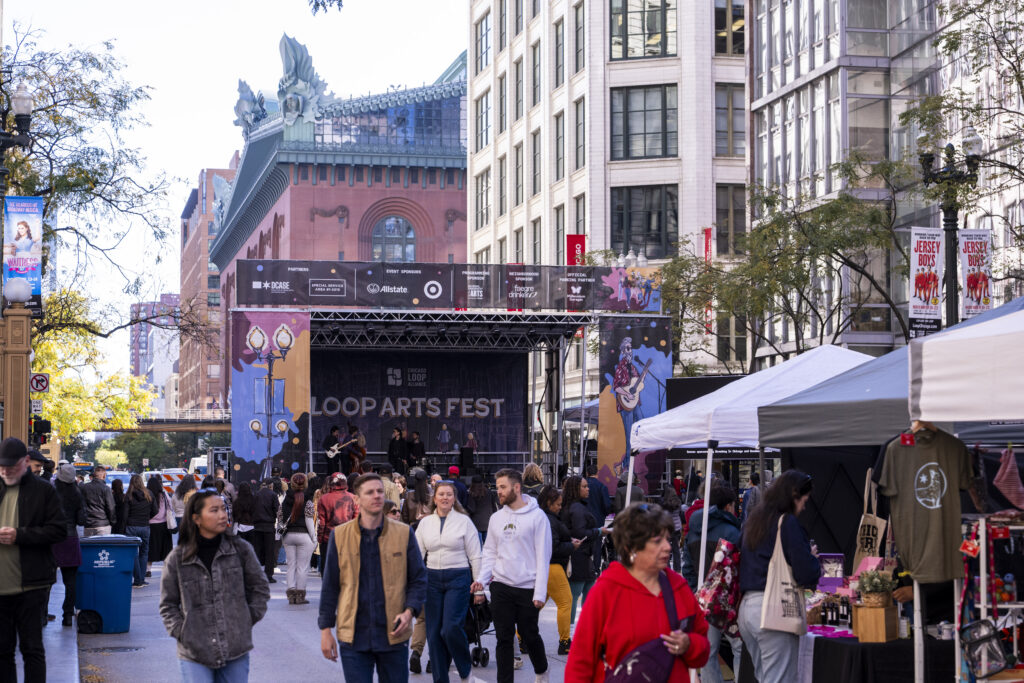
5 MINUTE READ -- What makes the Loop a cultural destination? It's the artists who bring creativity to our streets, the theaters that bring stories to life, the museums that inspire discovery and the cultural organizations that make Chicago unique. But beyond enriching our neighborhoods, arts and culture are a powerful economic driver. Chicago Loop Alliance's Arts & Culture in the Loop Economic Impact Study explores the significant role the sector plays in shaping downtown Chicago's economy, supporting local businesses, creating jobs and attracting visitors. The findings highlight why investing in arts and culture isn't just an investment in creativity—it's an investment in the vitality, growth and future of the Loop.
About this Study
Arts and culture are more than what make the Loop an exciting place to visit, work and explore. They're a major economic engine driving jobs, businesses, tourism and investment throughout Chicago.
Commissioned by Chicago Loop Alliance and conducted by Sound Diplomacy, the Arts and Culture in the Loop Economic Impact Study examines the economic contributions of the Loop's creative economy, drawing on data from 1,615 arts and culture businesses and institutions.
The study reveals the significant economic footprint of arts and culture in the Loop, with findings that demonstrate the sector's reach across employment, economic output, attendance and tax revenue.
Here are four key findings:
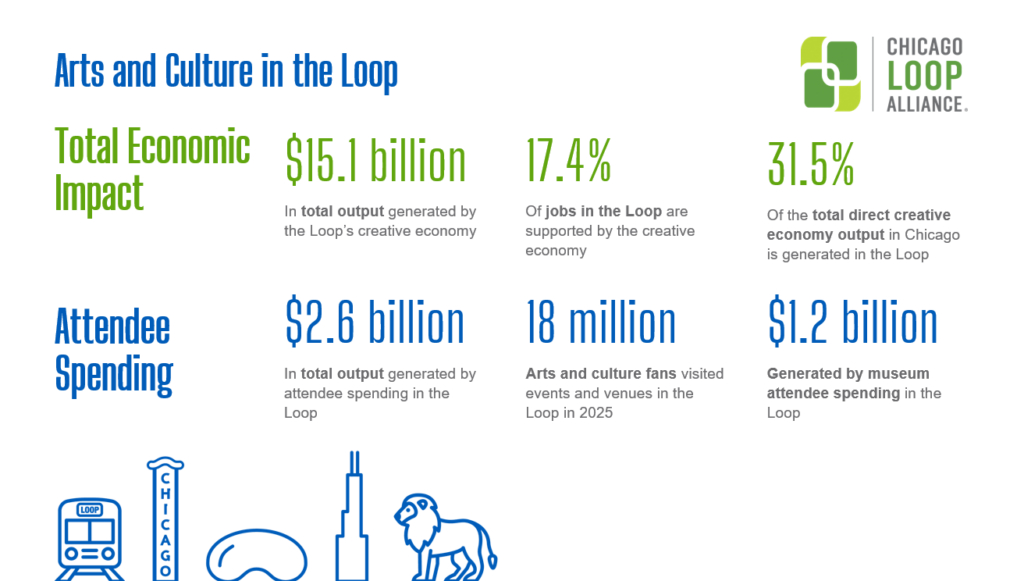
- $15.1 billion in annual economic output: Arts and culture generate a substantial economic footprint, demonstrating the sector's influence on the Loop and the broader economy.
- 73,146 jobs supported: The creative and cultural sector supports more than 73,000 jobs, representing 17.4% of overall employment in the Loop.
- 18 million annual attendees: Cultural events, venues and experiences attract approximately 18 million attendees each year, bringing people into downtown from across Chicago and beyond.
- $1.7 billion in tax revenue: Arts and culture contribute significantly to public revenue, reinforcing the sector's importance to the region's economic foundation.
Together, these figures demonstrate that arts and culture are not simply an amenity or an added attraction. They are an essential part of the Loop's economic ecosystem.
More Than Entertainment
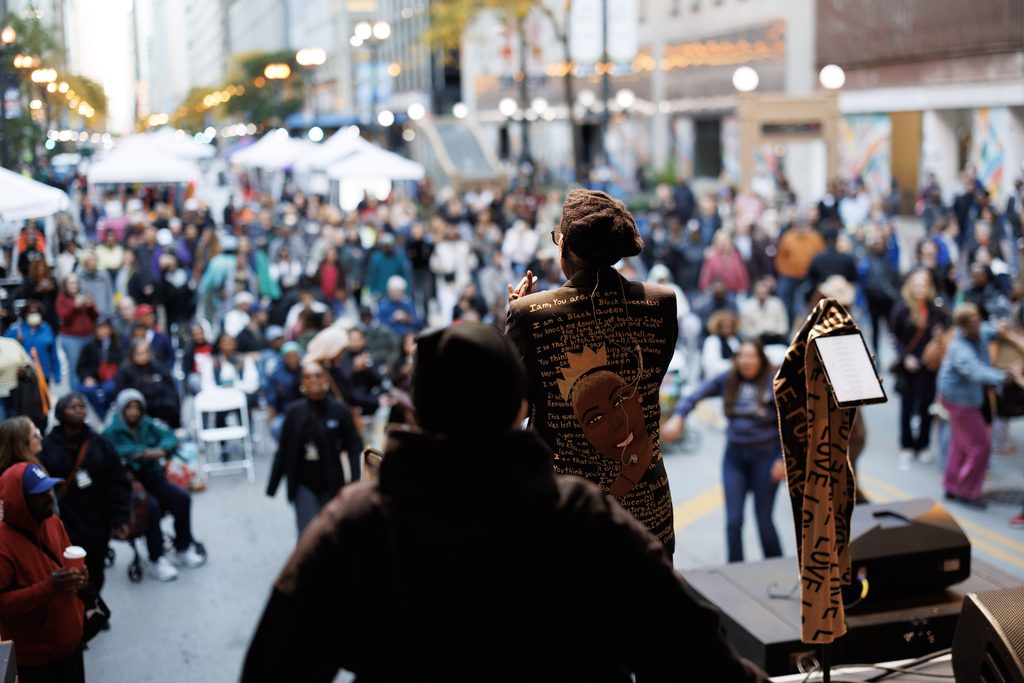
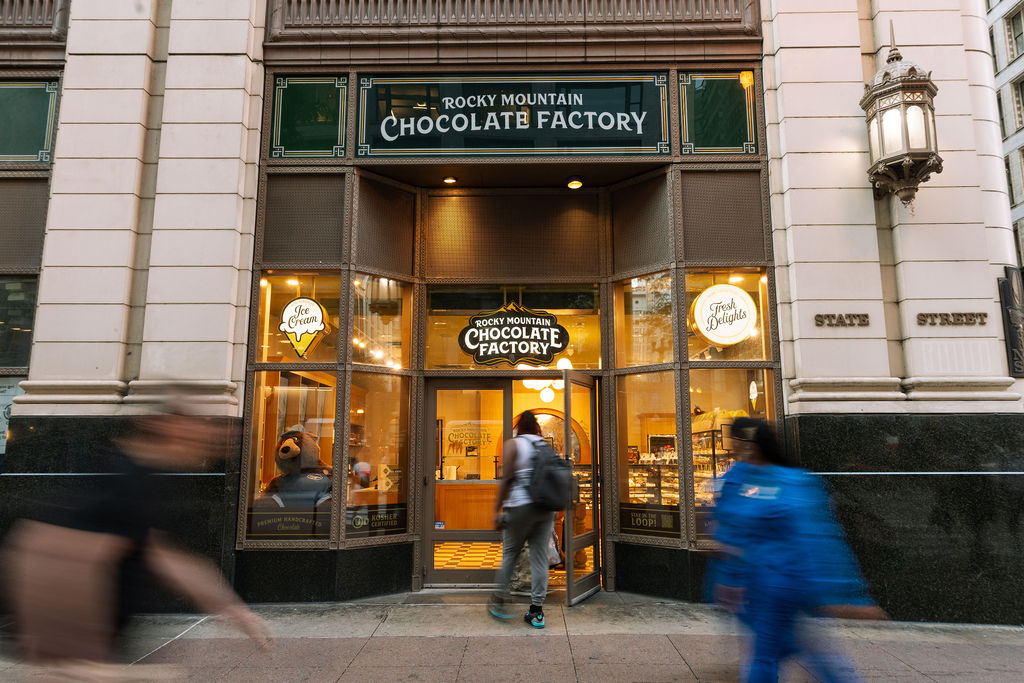
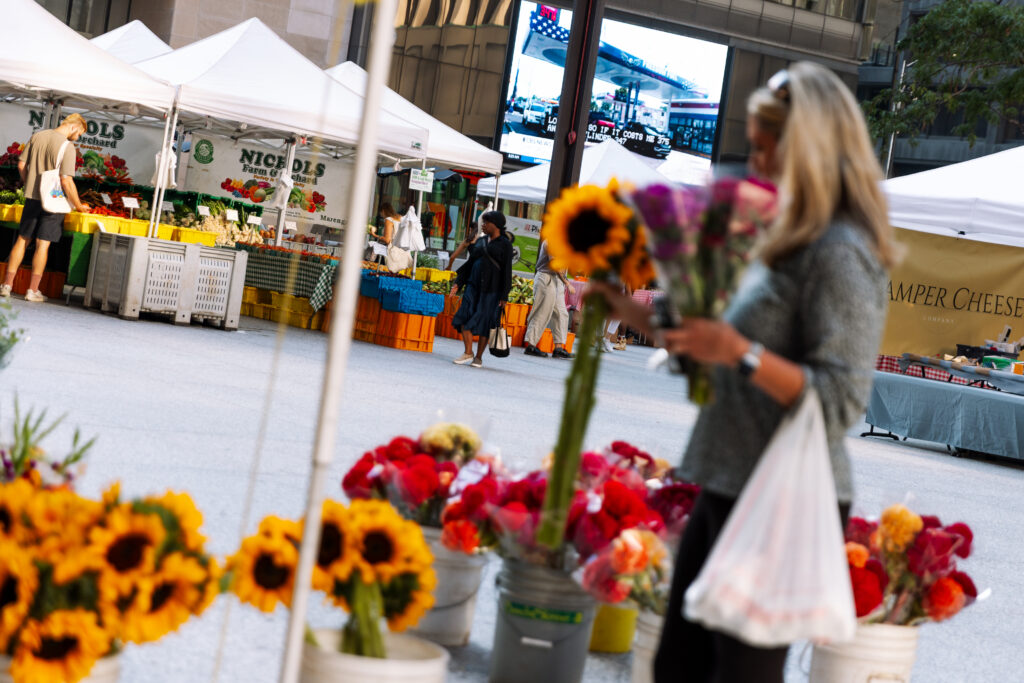
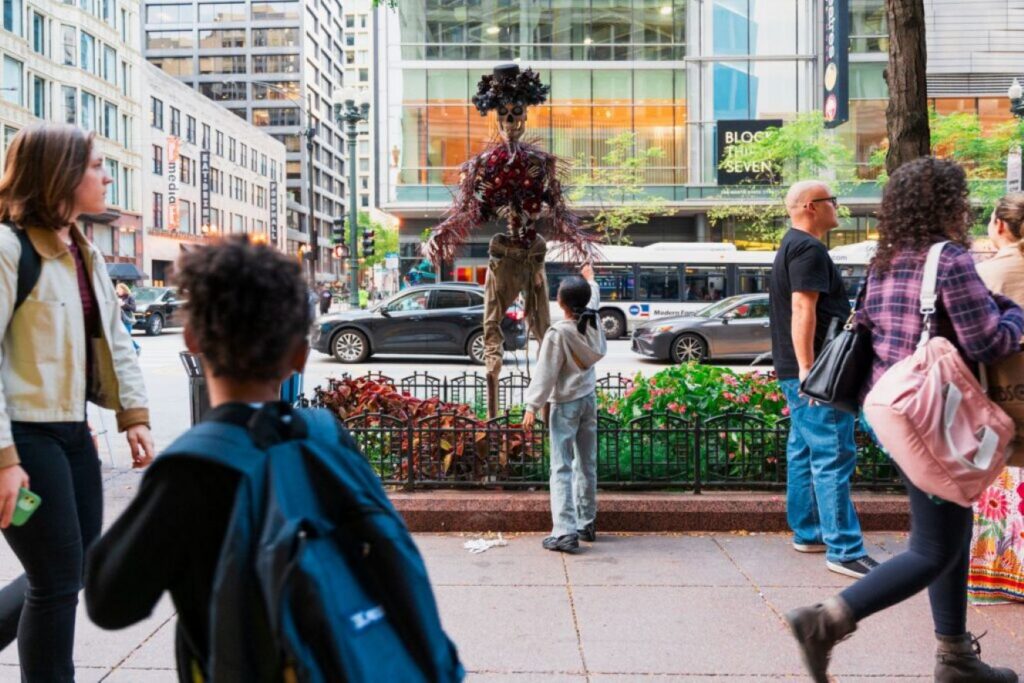
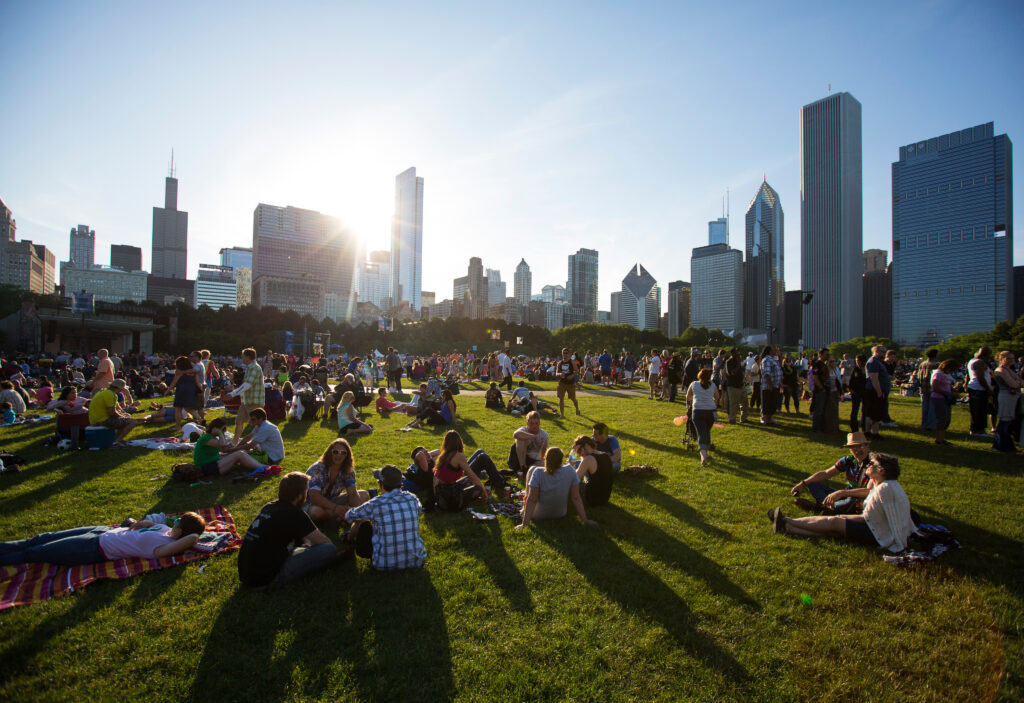
Every performance, exhibition, cultural event and public art experience creates opportunities for people to engage with the Loop. Visitors who come downtown for a show or museum experience also have opportunities to explore nearby restaurants, shop at local businesses, visit attractions and experience everything the neighborhood has to offer.
This activity helps create a more connected downtown economy, where cultural experiences complement the businesses, institutions and destinations surrounding them.
Arts and culture also contribute to the Loop's identity as a place to live, work and visit. A strong cultural environment creates opportunities for connection, encourages repeat visitation and makes downtown more appealing to residents, workers, businesses and tourists alike.
Supporting Jobs, Businesses and a Creative Community
The impact of the creative economy is also reflected in the people and organizations that make it possible. Behind every performance, exhibition, event and cultural attraction are artists, performers, production teams, educators, administrators and countless other professionals who contribute to the sector.
With 73,146 jobs supported, arts and culture represent a significant part of the Loop's employment landscape. These opportunities help sustain a diverse workforce while reinforcing the importance of cultural institutions and creative organizations as contributors to downtown's economic strength.
Just as importantly, the sector creates an environment where creativity and commerce intersect. Cultural organizations, businesses and community partners all play a role in making the Loop an engaging and economically active destination.
Why This Matters for the Future of the Loop
As downtowns continue to evolve, arts and culture are increasingly important to creating places where people want to spend their time. A thriving cultural landscape helps differentiate the Loop, strengthens its appeal as a destination and creates meaningful reasons for people to return.
The findings of this study provide more than an economic snapshot. They offer valuable insight for business leaders, cultural organizations, developers, policymakers and community stakeholders who are shaping the future of downtown Chicago.
Understanding the economic contributions of arts and culture helps make the case for continued investment, collaboration and support for the organizations that bring these experiences to life. It also reinforces the importance of recognizing arts and culture as an integral part of downtown planning and economic development.
Explore the Arts & Culture in the Loop Economic Impact Study to learn more about the numbers behind the creative economy.